

We live in a world where it feels increasingly difficult to practice presence and cut through fabricated noise to really hear our surroundings. Yet certain noise, sound and listening is necessary for us to be present. And, more than ever, we need to be present. This requires curiosity, intention, unfamiliarity and patience within time and space. My overall focus for this newsletter is to create a space that reflects on how music maps and catalogs our memories, feelings, and sensations across temporal, physical and imagined spaces. What I’m Humming is a place for us to pause and celebrate some of these musical moments. So it felt serendipitous when I stumbled upon Conny Frischauf.
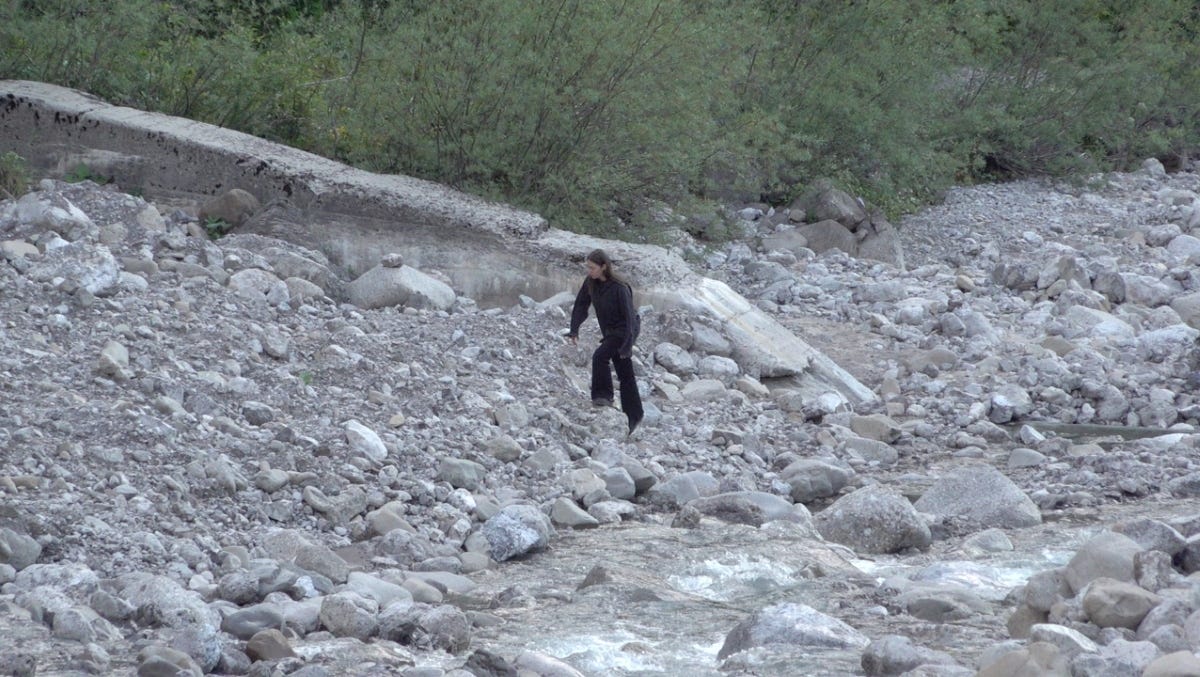
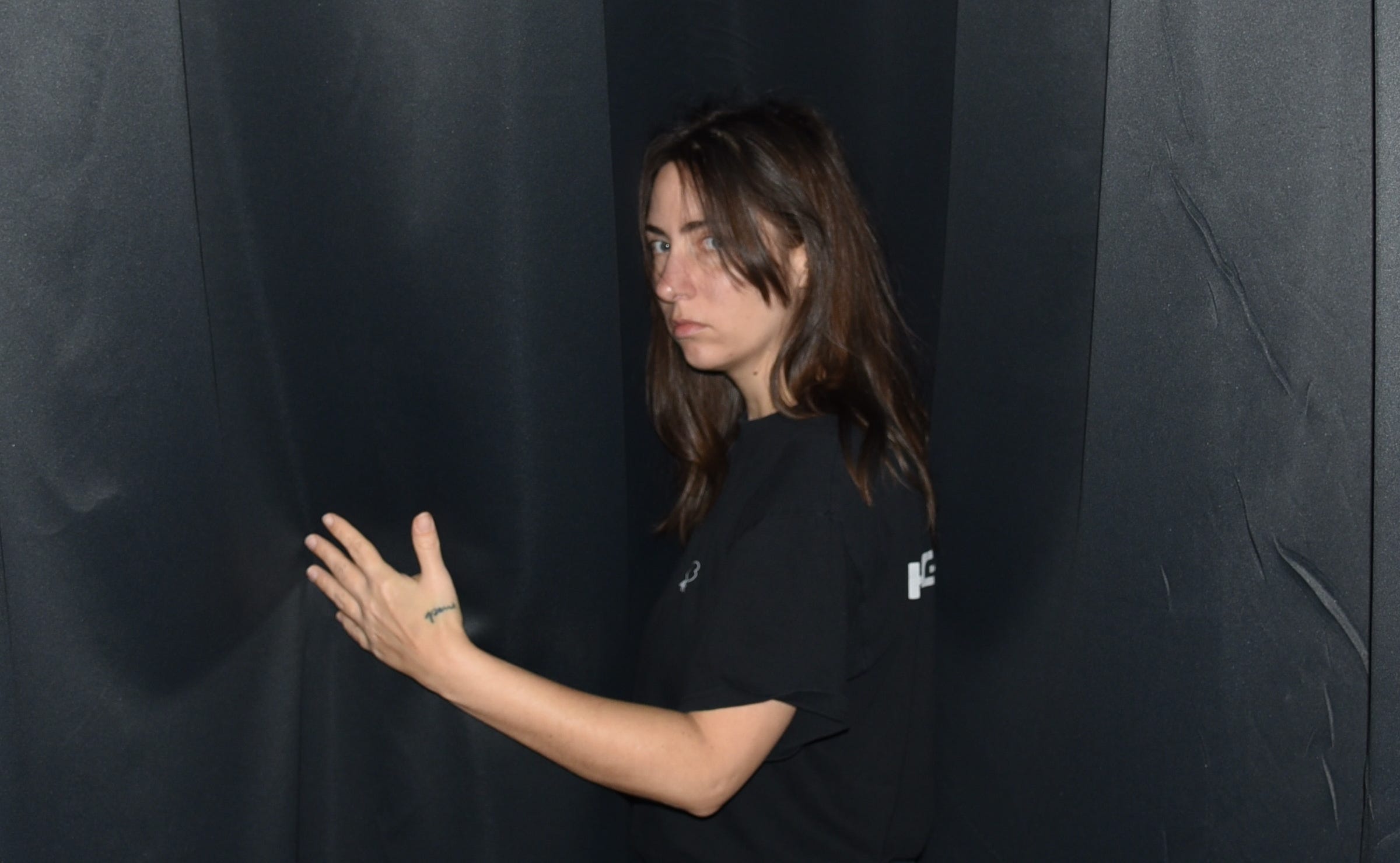
Conny Frischauf’s music is absolutely delightful. Capturing my attention upon first listen, each of Frischauf’s songs allow the full exploration of sounds to manifest within their full sonic spectrum. It’s this curiosity and exploration of sound that is at the core of Frischauf’s art. Based in Vienna, Austria, Conny Frischauf is a composer, musician and artist creating through multimedia installations and recordings. Their numerous multimedia forms include audio-production, performance, installation, publication and sculpture. In 2024 they created the platform “Sedimente” which is a platform “meant as a basin where voices, sounds, texts, and spaces interlace and merge.”
Frischauf released their first EP Effekt & Emotion (2018) via Kame House, followed by Affekt & Tradition (2019) via International Major Label. Their debut album Die Drift (2021) is an immersive world of kraut, electronic and synth pop sounds. Their voice floats in melodically, at times narrating in German over syncopated beats and strange percussion. In 2024 Frischauf released their second studio album Kenne Keine Töne (2024). The album dances across genres of lively pop and experimental while finding sonic partnership with field recordings and Frischauf’s buoyant vocals.
Somehow Frischauf’s music is able to awaken all five of my senses. Their songs are exploratory in nature, playful and brimming full of curiosity. I have never heard anything like it. Their songs are composed of layered familiar yet unknown sounds of field recordings, synth machines, flutes, birds, rustling in the forest, wind and much more. These sounds were recorded in Frischauf’s surroundings, unique to the temporal and physical sonic spaces they were exploring.
In reading Frischauf’s interview responses, I realized that they articulated the exact openness that surfaces when listening to their music: “Curiosity in itself neither asks for preconditions nor does it come with expectations towards a specific result.” Frischauf’s music reminds us that our relationships to sounds are ever evolving and shapeshifting with each present moment of listening. I’m excited for you to learn more about them.
Interview with Conny Frischauf
EM: Every time I listen to your work, I am reminded to intentionally listen. Your music is a reminder to meet each sonic moment, including moments of silence, with openness. How do you feel when you listen to your own music?
CONNY: What is it that reminds you or us of listening intentionally in general? This question can open up interesting thoughts on our relation to the (sonic) spaces we inhabit or the (sonic) spaces we are inhabited by.
Listening to music of mine that is already published or produced evokes different memories—from the creation process, the intention of playing/recording, the collaborations and so on. It differs with every piece and every sound. Sometimes I remember the feeling when first meeting a sound, a rhythm, a melody and how it surprised or inspired me. Or I think of a friend, a season, a moment, a glimpse.
Listening to music or sound in the moment of playing is a precious state of listening. It is in direct resonance. It is a moment of past and present simultaneously. It cannot be extracted.
I am wondering what is my “own” music? I have to think of the act of owning and ownership. Dealing with sound to me is being together rather than possessing; just like you mentioned in your next question, it is a dialogue.
~
“Listening to music or sound in the moment of playing is a precious state of listening. It is in direct resonance. It is a moment of past and present simultaneously. It cannot be extracted.”
~
EM: Your music feels full of curiosity—a dialogue between you and the instruments. How do you nourish your curiosity? What’s something you’re curious about right now?
CONNY: Thank you for this nice question. It made me think a lot about curiosity as a form of relating, which is essential to me. Curiosity in itself neither asks for preconditions nor does it come with expectations towards a specific result. Curiosity as a way to actively be involved and participate in the present allows us to be open to what is not known yet. It enables one to co-exist. A presence-bound condition. I have to think of a friend from whom I learnt a lot about curiosity—we lived together in Vilnius some years ago—thank you Izabelė!
I am curious about the present. I am curious about relations. I am curious about lived experience. I am curious about touching materialities. I am curious about how pain and inequalities affect the way we negotiate and live present. I am curious about details and depth. I am curious about what separates and connects. I am curious about wonky sounds. I am curious about voids and echoes.


EM: I read that you create sound installations and explore the intersection of technology, memory and space. Could you please tell me more about this exploration?
CONNY: Yes, all of the contexts you mentioned have to do with my practice but the fundament of my work is relational, spatial, long-term and process based. Technology is a tool but not necessarily a method or motif of my work. Through situated and research practice I learn about conditions of places—their cultural-ecological-political entanglements and (collective) memory are essential. My works deal with waterbodies and/or border areas. Sound and listening are the core practice and the starting point when working in specific contexts and places.
I have been working with room filling installations some years ago but sound wasn’t actively involved. Now I am interested in connecting architecture, sound, text, context and more to experiment with modes of perception and attention within exhibition settings.
My practice lives and derives from dynamic conditions of presence and place—I want the work to be able to speak and breathe according to these dynamics. What I do doesn’t follow current modes of consumption of images because it isn’t based on gaining attention through (hyper) visibility. For me this is a way to acknowledge and appreciate the contexts I am working in. It functions outside of consumerism logics as well as supports invisibilities, silence and relations. Everything I do is influenced by thoughts of how we consume and produce and how we exist and place ourselves within these frameworks.
~
“Sound and listening are the core practice and the starting point when working in specific contexts and places.”
~


EM: Musically, what are you up to this year? New releases? Projects?
CONNY: Yes, some musical moments and releases are planned but currently the whole political situation in Vienna, as in many other parts of Europe, is changing. Cultural and social funds have been minimized or cut. Many places and organizations had to stop implementing their work.
The conditions for working as an artist or host have become less certain and less plan-able. The structures change and new forms of coming together and organizing will emerge. Socialized with the spirits of DIY culture, I think that sisterhood and supporting each other will establish new—and revitalize—ways of how we interact in the cultural fields.
Now getting back to really answer your question: What I know now is that a compilation will be released where I contributed a track, I will do scoring and postproduction for one or two films, I will be performing and I might be releasing a tape. In May/June I will have the chance to go to Nantes, France to work with sounds in the context of transitional spaces on île de Nantes, an island in the river Loire. With “Sedimente,” a platform I started in 2024 focused on experimental sound-works and text based formats by different amazing artists, things will be published on an irregular basis.
EM: A big goal with this newsletter is to encourage listeners to directly support artists. How would you like listeners to support your music?
CONNY: Yes, that’s important—thank you for this question. There are different ways to support my work. You can sign up for a newsletter via my website—I am announcing dates, publications and so on there.
Via my Bandcamp you can listen to my music or follow me - there is also a Bandcamp page of “Sedimente,” the platform I run.
Recently I started a Patreon where I still need to arrive but I want to give more insight into my practice and share texts, poems, images, thoughts, fragments and fieldwork related content. It is in English and German.
The best support for artists is to follow what they do, to buy their music/publication/merch, to join their exhibition, to tell them that you appreciate their work, to be curious about it. If you are a host, ask them for a collaboration or an interview like this :)
EM: Finally, what is a song you can’t stop humming?
CONNY: “Hum” by Leonie Leonie
You can follow and support Conny here:
Website | Patreon | Conny Frischauf’s Bandcamp | Sedimente Bandcamp
Immense gratitude for Conny and for sharing their thoughtfulness with What I’m Humming! Conny’s responses have really stuck with me and have me thinking more about my interactions and encounters with sound in present moments (music or not). I hope you can all take a moment to soak in this interview and Conny’s stunning sonic projects.
Loved this interview. Such thoughtful and poetic responses. Lots to think about.
“The structures change and new forms of coming together and organizing will emerge.” 🤍